
Why Kenya Is One of the World's Leading Flower Exporters
August 24, 20265 min read
Contents
Kenya has grown into one of the world's most significant sources of cut flowers, supplying wholesalers, importers and florists across Europe, the Middle East, Asia and beyond. Understanding why international buyers gravitate toward Kenyan-grown flowers — rather than simply accepting the reputation at face value — helps explain what to actually expect, and what to actually ask for, when sourcing from this origin.
Key Takeaways
- Kenya's reputation rests on a specific, explainable combination of geography and decades of industry build-out — not marketing alone.
- Altitude and equatorial light are the foundation, but growing infrastructure, a trained workforce and air-cargo connectivity are what turn that foundation into a reliable export supply.
- Growing conditions set the ceiling on quality; post-harvest handling determines how much of that ceiling survives to the buyer.
Altitude and Equatorial Light
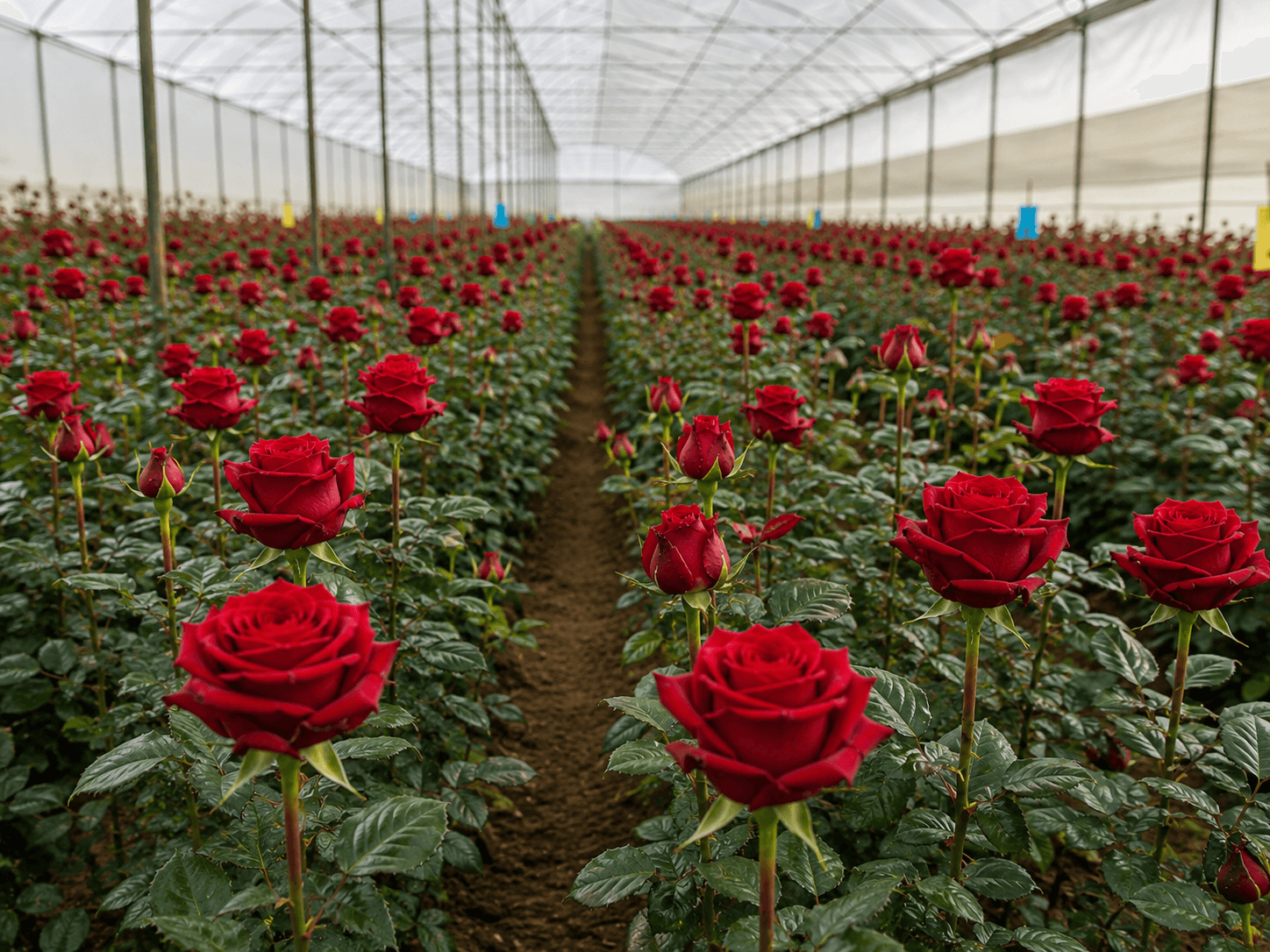
Much of Kenya's flower production takes place at elevations between 1,500 and 2,500 metres above sea level, near the equator. This combination gives growing regions consistent day length year-round, strong equatorial sunlight, and cool night-time temperatures — conditions that slow plant respiration and encourage strong stems, saturated colour and dense petal structure. Few flower-growing origins combine altitude and equatorial position in quite the same way, which is part of why this advantage is so specifically tied to Kenya (and a small number of other high-altitude equatorial origins) rather than being a generic claim.
Decades of Growing Infrastructure
Decades of investment in greenhouse growing, irrigation and post-harvest handling have built a mature production base capable of meeting the consistency that international buyers require, batch after batch. This maturity matters because growing a good flower once is very different from growing the same quality flower reliably, at volume, week after week — the infrastructure behind that consistency took decades to build and is not easily replicated quickly by a newer origin.
Air Freight Connectivity Through JKIA
Nairobi's Jomo Kenyatta International Airport has developed into a major cargo hub for fresh produce and flowers, with regular freight capacity to Europe, the Middle East and beyond, supporting the fast transit times that fresh flowers depend on. Because fresh flowers are so time-sensitive, this connectivity is not a minor convenience — it's a core part of what makes Kenya viable as an export origin at all. See Flower Air Freight From Kenya for how this stage works.
A Large, Experienced Workforce
Kenya's flower sector employs a large, experienced workforce across growing, grading and post-harvest handling, contributing to the country's reputation for consistent export-grade quality. Grading and quality control in particular depend on trained human judgement — recognising correct harvest stage, consistent bloom size, subtle quality issues — and that expertise, built up across a mature industry, is difficult for a newer origin to match quickly.
A Reference Point for Quality
Together, these factors — climate, infrastructure, air connectivity and workforce experience — explain why Kenyan-grown flowers, and Kenyan roses in particular, have become a reference point for quality in international flower trade. This reputation is earned through the underlying fundamentals described above, not simply asserted, which is also why it's worth asking any specific supplier to demonstrate these fundamentals in practice — named varieties, specific grading standards, a real cold-chain process — rather than relying on Kenya's country-level reputation alone. See How to Choose a Kenyan Flower Supplier for that evaluation framework.
What This Means for International Buyers
For a buyer evaluating Kenya as a sourcing origin, the practical takeaway is this: the underlying advantages are real and explainable, but they set a ceiling on what's possible, not a guarantee of what any single shipment will deliver. The gap between that ceiling and the flower that actually arrives is closed by supplier-specific quality control, cold-chain discipline and export preparation — which is why supplier due diligence still matters even when sourcing from a well-regarded origin. See Why Kenya for more on the climate science behind this advantage, or browse the full catalogue to see what's currently available.
Frequently Asked Questions
What altitude do Kenyan flower farms typically grow at?
Most Kenyan flower production takes place at elevations between 1,500 and 2,500 metres above sea level. This range, combined with the country's equatorial position, gives growing regions consistent day length year-round and cool overnight temperatures.
Is Kenya's climate advantage specific to roses, or does it apply to other flowers too?
The same altitude and equatorial light conditions benefit the wider range of flowers grown in Kenya, not roses alone — carnations, alstroemeria, gypsophila and other varieties are grown in the same highland regions and share the same underlying growing advantage.
Does Nairobi's airport play a role in flower export quality?
Yes. Jomo Kenyatta International Airport (JKIA) has developed into a major cargo hub for fresh produce and flowers, with regular freight capacity to key destination markets, which supports the fast transit times fresh flowers depend on to preserve vase life.
Does strong growing climate alone guarantee a good flower on arrival?
No. Growing conditions set the ceiling on quality, but post-harvest handling — grading, hydration, cold chain and packing — determines how much of that quality actually survives the journey to a buyer. See Flower Quality and Cold Chain for how that process works.
Does Kenya's reputation mean every Kenyan supplier delivers the same quality?
No. Country-level advantages set a ceiling on what's possible, but individual suppliers vary in how well they execute grading, cold chain and export preparation. See How to Choose a Kenyan Flower Supplier for how to evaluate a specific supplier rather than relying on origin reputation alone.
Related Reading
Ready to source Kenyan flowers? Request an Export Quote.
Ready to Source Kenyan Flowers?
Tell us your flower, specifications and destination — our export team will confirm availability.
Related Articles
Kenya Flower IndustrySeptember 20265 min read
Kenya's Flower-Growing Regions
Kenyan flower production is concentrated in a handful of highland districts, each shaped by its own altitude and microclimate.
Read article →
Kenya Flower IndustryAugust 20266 min read
Kenya Flower Seasons & Availability
Kenya's equatorial climate supports relatively stable year-round growing, but availability still varies by variety, season and current supply — here's what buyers should know before placing an order.
Read article →