
Contents
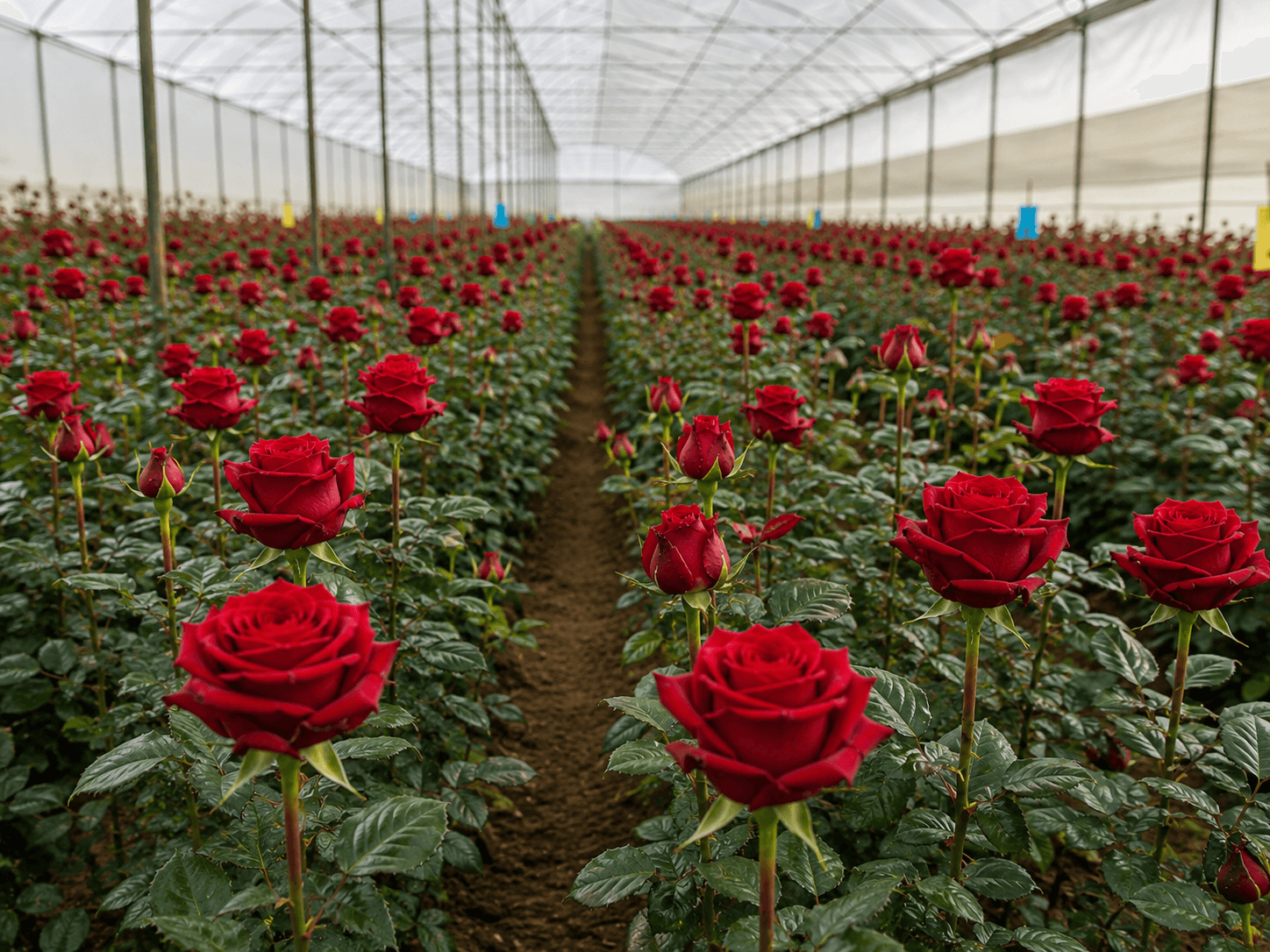
Kenya's flower industry is often discussed as a single national output, but production is actually concentrated in a small number of highland districts — each with its own altitude, microclimate and growing history. Understanding this geography helps explain both why Kenya's quality reputation is genuine and repeatable, and why a sourcing network spanning multiple regions gives buyers more flexibility than reliance on any single farm.
Key Takeaways
- Kenyan flower production is concentrated in a handful of Rift Valley and Mount Kenya highland districts, not spread evenly across the country.
- Each region shares the core altitude-and-equator advantage, with small microclimate differences (lake effect, elevation, night temperature) shaping subtle variation between them.
- For most buyers, variety, colour, stem length and grade matter more to a specification than which specific district a stem was grown in.
- Sourcing across multiple regions gives an exporter more resilience and variety range than depending on a single farm or district.
Naivasha
Naivasha, in the Rift Valley around Lake Naivasha, holds the country's largest concentration of flower farms and is the district most commonly associated with Kenyan flower exports internationally. Sitting at roughly 1,880 metres above sea level, it combines equatorial sunlight with the moderating effect of the lake and reliable water access for irrigation. This combination of scale, infrastructure and decades of accumulated grower experience is why Naivasha is often the first region international buyers hear about when researching Kenyan flowers.
Nakuru
Further north along the Rift Valley floor, Nakuru is home to some of Kenya's most established rose farms, with decades of commercial flower growing behind it. Altitude and soil conditions here support strong, consistent rose production at scale, and Nakuru's growing history runs in parallel with Naivasha's rather than behind it — both are mature, established districts rather than one being a newer alternative to the other.
Nanyuki and Timau
Closer to the equator at the base of Mount Kenya, Nanyuki and Timau sit at higher elevations than the Rift Valley floor, producing cooler night-time temperatures even with consistent equatorial day length. This combination is associated with denser petal structure and deeper colour saturation in flowers grown here — a genuine microclimate difference within Kenya's broader growing advantage, not a separate story from it.
The Wider Mount Kenya Region
Beyond Nanyuki and Timau, flower production extends across the highlands circling Mount Kenya, often above 1,800 metres — among the highest-altitude flower-growing areas in the country. Farms at this elevation typically report some of the coolest overnight temperatures used in Kenyan flower production.
Regions at a Glance
| Region | Approx. altitude | Notable for |
|---|---|---|
| Naivasha | ~1,880m | Largest concentration of flower farms; lake-fed irrigation |
| Nakuru | Rift Valley floor | Established, large-scale rose production |
| Nanyuki & Timau | Higher elevation, Mount Kenya base | Cooler nights; denser petal structure, deeper colour |
| Wider Mount Kenya region | Often 1,800m+ | Among the highest-altitude Kenyan flower production |
Why Regional Diversity Matters for Sourcing
A sourcing network spanning multiple growing districts gives an exporter more resilience than dependence on a single farm or region — if weather or production timing affects one area, supply from another region can help maintain overall availability and variety range. This is one of the practical advantages of working with an exporter who sources across Kenya's growing regions rather than a single farm's output alone.
Why the Regional Differences Matter to Buyers
For most buyers, the practical takeaway isn't which specific district a stem was grown in, but that Kenya's reputation for quality is built on a genuine altitude and climate advantage repeated across several highland districts rather than a single location. Our Why Kenya page covers the climate science behind this in more depth, and our Kenya Flower Exporter overview explains how sourcing across these regions comes together into a single export catalogue.
Frequently Asked Questions
Which region produces the most flowers in Kenya?
Naivasha, in the Rift Valley, holds the country's largest concentration of flower farms and is the district most commonly associated with Kenyan flower exports internationally, helped by reliable lake-fed irrigation and equatorial sunlight.
Does the growing region affect flower quality?
Altitude and microclimate do influence characteristics like petal density and colour saturation — higher-elevation areas around Nanyuki, Timau and Mount Kenya tend to see cooler overnight temperatures, for example. But Kenya's overall quality reputation is built on a shared altitude and climate advantage repeated across several highland districts, not one location alone.
Do I need to specify which Kenyan region my flowers come from when ordering?
Generally not. What matters most to a specification is variety, colour, stem length and grade rather than growing district — a sourcing network drawing across Kenya's growing regions is built to meet that specification consistently.
What altitude do Kenya's main flower-growing regions sit at?
Most sit between 1,500 and 2,500 metres above sea level. Naivasha is around 1,880 metres, while parts of the Mount Kenya region extend above 1,800 metres, among the highest-altitude flower-growing areas in the country.
Is Nakuru's flower industry different from Naivasha's?
Both are established Rift Valley growing districts with decades of commercial rose production behind them, though Naivasha holds the larger concentration of flower farms overall.
Does sourcing across multiple regions benefit buyers?
Yes. A sourcing network spanning multiple growing districts is more resilient to weather or production timing affecting any single area, which supports more consistent overall availability and variety range than reliance on one farm alone.
Related Reading
- Why Kenya Is One of the World's Leading Flower Exporters
- Flower Suppliers in Kenya
- Kenya Flower Seasons & Availability
Ready to source Kenyan flowers? Request an Export Quote.
Ready to Source Kenyan Flowers?
Tell us your flower, specifications and destination — our export team will confirm availability.
Related Articles

Kenya Flower IndustryAugust 20266 min read
Kenya Flower Seasons & Availability
Kenya's equatorial climate supports relatively stable year-round growing, but availability still varies by variety, season and current supply — here's what buyers should know before placing an order.
Read article →
Kenya Flower IndustryAugust 20265 min read
Why Kenya Is One of the World's Leading Flower Exporters
Kenya's high-altitude climate, established growing infrastructure and air freight connectivity have made it a major source of cut flowers for international markets.
Read article →