
From Farm to Global Market
Every Stem Follows a Careful Journey
Freshness is protected at every stage of the export process — from the moment a stem is cut to the moment it reaches an international buyer, across eight steps in three phases.
Jump to a step
01
of 3 phases
Phase 01
On the Farm
Every shipment starts with what's growing in the field — the variety selected, the moment it's cut, and how carefully it's sorted before it ever leaves the farm.
Step 01 of 8
Source
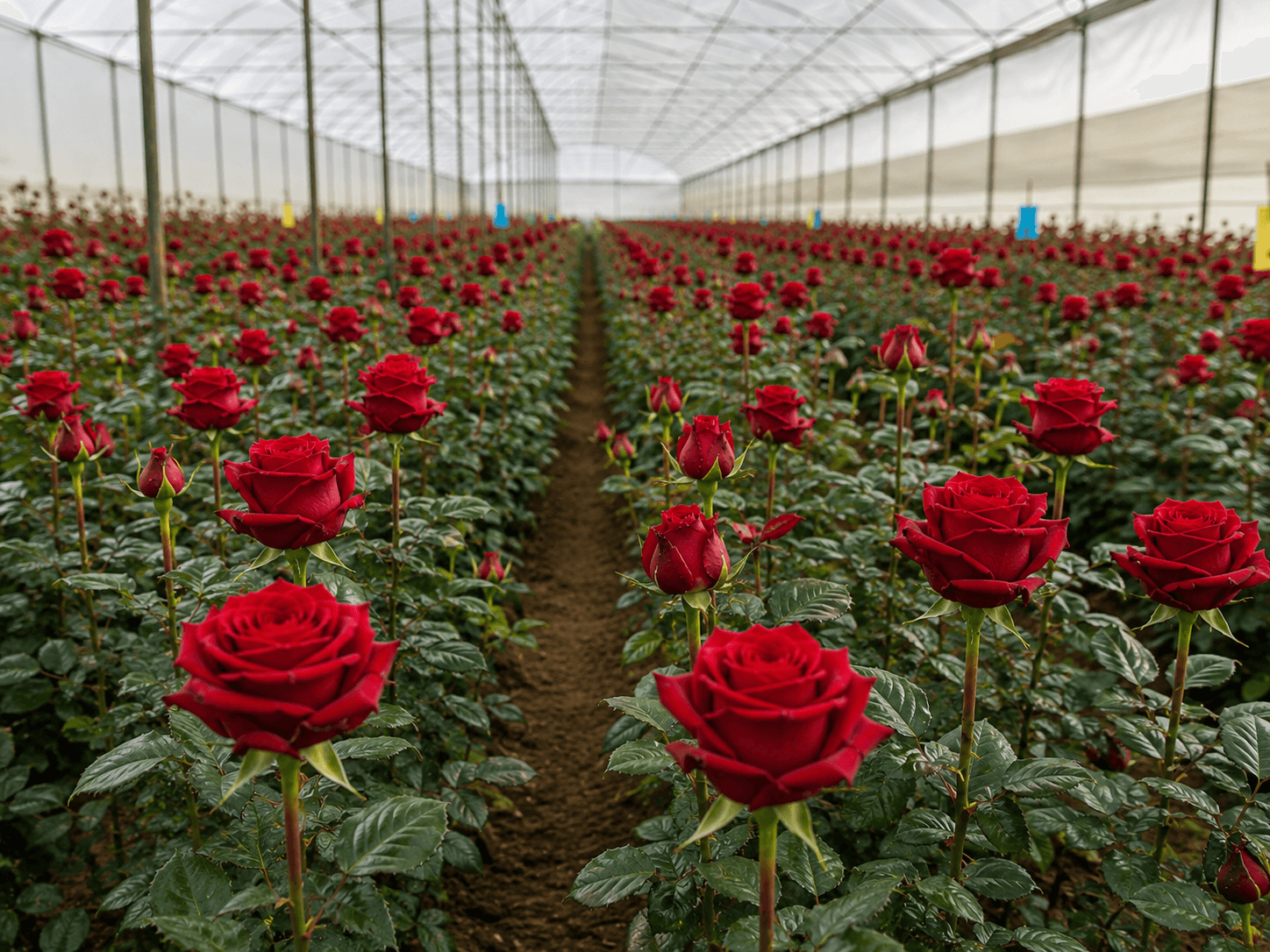
Flowers are grown in Kenya's high-altitude growing regions, where cool temperatures and strong equatorial light support strong stems and vivid colour. For buyers, this is the stage that sets the ceiling on quality — no amount of careful handling downstream can add back what growing conditions didn't provide.
Step 02 of 8
Harvest
Stems are cut at the optimal bloom stage for their variety, timed to maximise vase life once they reach the buyer rather than at peak bloom. Cutting too open shortens usable vase life after arrival; cutting too tight risks blooms that never open correctly.
02
of 3 phases
Phase 02
Handling & Cold Chain
From the grading table to the cold room, this stage is where vase life is either protected or lost. Temperature control starts here and doesn't break until arrival.
Step 03 of 8
Quality Control
Each stem is graded by length, bloom size and quality against export-grade standards, then inspected for pests, disease and physical damage to protect both product quality and compliance with import requirements. This is what makes the specification on a quotation — stem length, bloom size, grade — something buyers can actually rely on.
Step 04 of 8
Hydration & Cold Chain
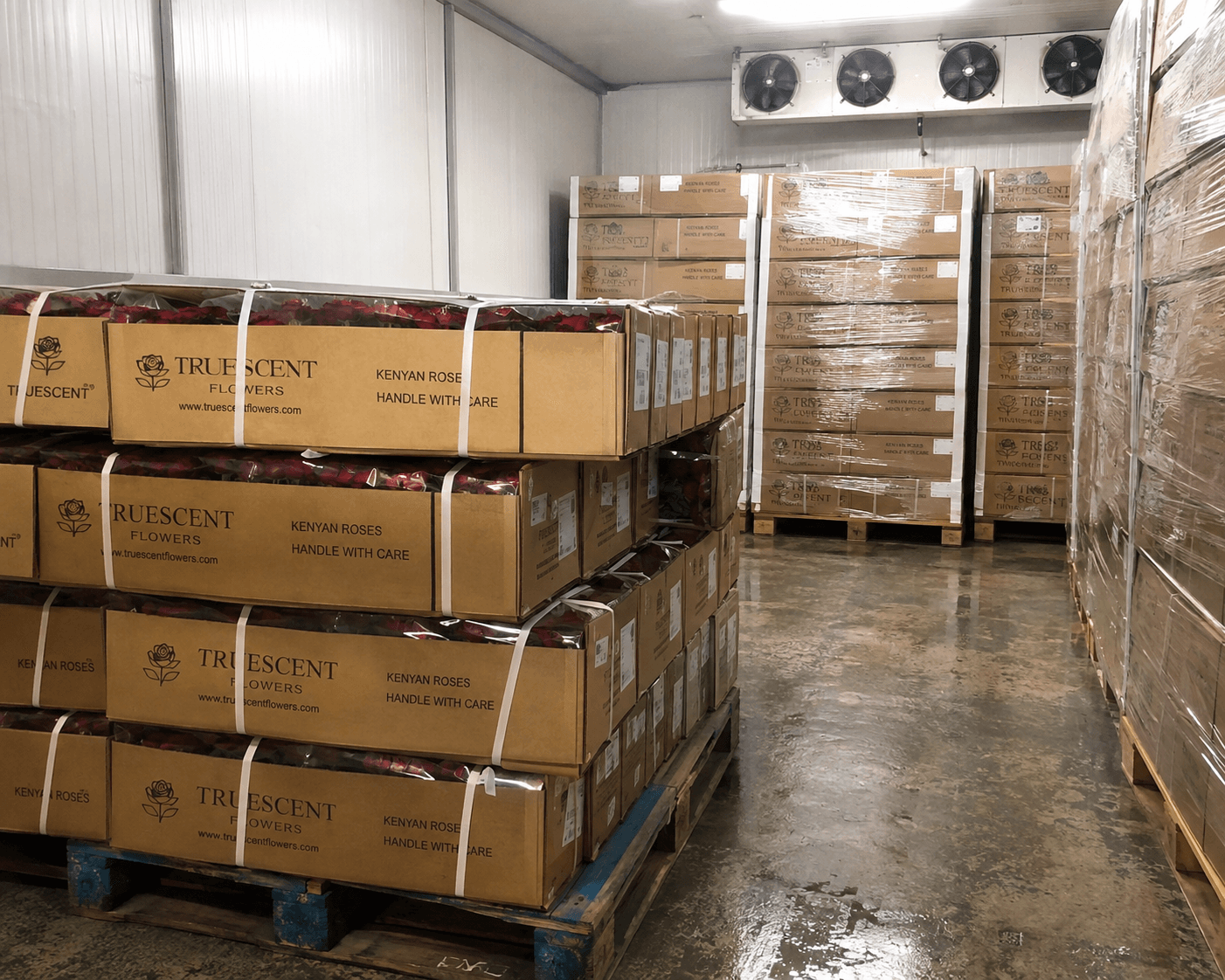
Flowers are hydrated and moved into temperature-controlled storage to slow respiration and preserve freshness ahead of packing. Cold chain integrity from this point forward is the single biggest factor in how much vase life survives the journey to a buyer.
Step 05 of 8
Packing
Stems are bunched, sleeved and packed into export cartons designed to protect blooms in transit and maintain cool temperatures, using packaging formats suited to each flower type and the volume ordered.
03
of 3 phases
Phase 03
Export & Delivery
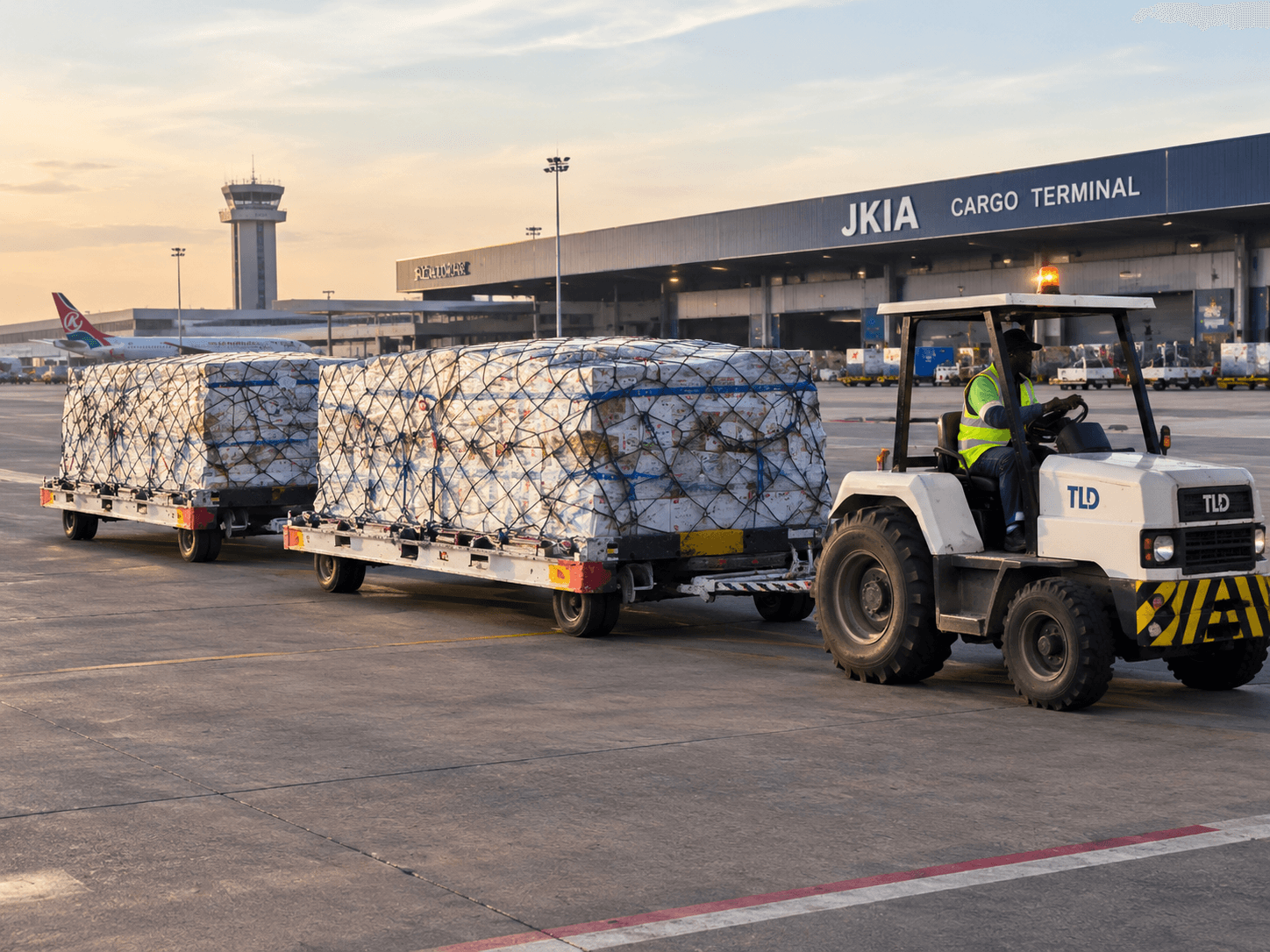
Cartons move under cold chain conditions to Nairobi's airport, backed by the documentation international customs authorities require, and on to the buyer.
Step 06 of 8
Documentation
Phytosanitary certificates, invoices and shipping documentation are prepared to match destination-country import requirements, so shipments move through customs without avoidable delay.
Step 07 of 8
Air Freight
Cartons move to the airport under cold chain conditions and are consolidated for air freight to their destination market, with routing and timing coordinated to keep time outside temperature control to a minimum.
Step 08 of 8
Destination
On arrival, flowers move quickly through customs and cold storage handling to reach the buyer while freshness is at its best — the faster this stage clears, the more vase life is preserved for the end customer.
Freshness Is Protected From Farm to Destination
Every stage of our export process is designed with one goal — to protect vase life so flowers arrive in the best possible condition.