
Quality & Cold Chain
Every Stem Matters
From the moment a flower is harvested to the moment it reaches its destination, every stage is handled with precision — because vase life, once lost, cannot be recovered downstream.
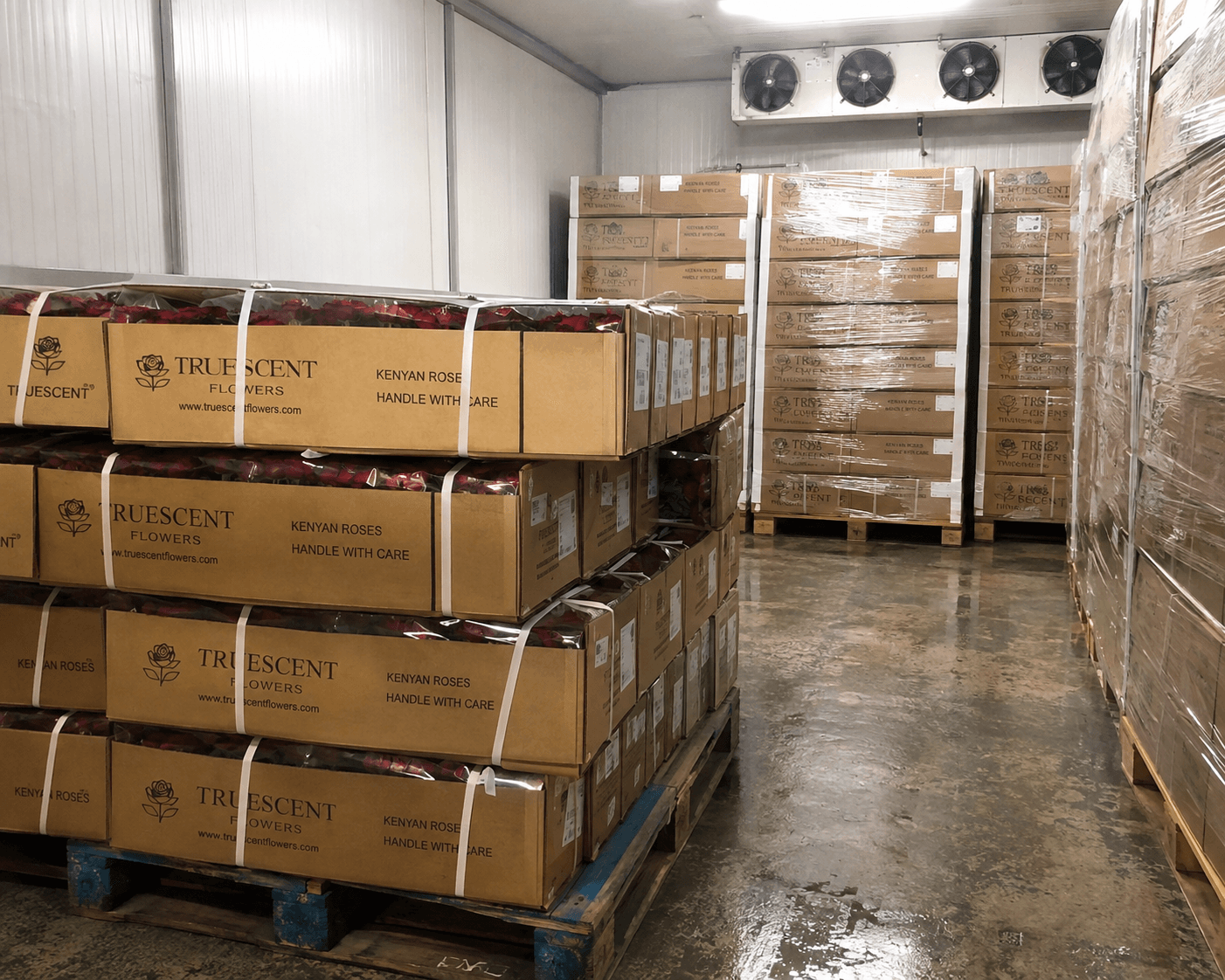
Quality in cut flower export isn't decided at one point in the process — it's the sum of every stage from harvest to delivery.
A flower can be grown perfectly and still arrive in poor condition if the cold chain breaks somewhere between the farm and the buyer. That's why we treat grading, hydration, temperature control, packing and air freight as one continuous system rather than separate handoffs — each stage is judged by how much vase life it protects for the stage that follows.

Selection & Harvest
- Flower Selection
- Varieties and growing blocks are matched to the specification each order requires — stem type, colour and grade are confirmed against the buyer's request before a single stem is cut.
- Harvest Timing
- Stems are cut at a bloom stage calculated for the journey ahead, not at peak bloom. Cutting too open shortens usable vase life after arrival; cutting too tight risks blooms that never fully open — timing is judged per variety.

Grading & Inspection
- Grading by Stem Length & Grade
- Every stem is sorted into length bands (commonly 40cm, 50cm, 60cm and 70cm+ for roses) and graded by bloom size, stem strength and overall presentation, so the specification on a quotation is something a buyer can rely on.
- Stem Quality Checks
- Stems are inspected for straightness, foliage condition and physical damage, and checked for pests or disease — protecting both product quality and compliance with destination import requirements.
Hydration & Cold Chain
- Hydration
- Cut stems lose water pressure the moment they're harvested. They're placed in a hydrating solution almost immediately to rebuild turgidity before it can affect bloom quality.
- Temperature Management
- Flowers move quickly into temperature-controlled rooms, typically held in the 2–4°C range used across the cut-flower industry, which slows respiration and the rate at which stored sugars are used up.
- Cold Storage
- Stems remain in cold storage ahead of packing, and every additional minute spent outside that temperature band — waiting, sorting, transferring — is time subtracted from the vase life a buyer eventually sees.

Packing & Documentation
- Professional Packaging
- Cartons are sized and lined to protect stems from crushing, bruising and moisture loss while maintaining airflow, using formats suited to each flower type and the volume ordered.
- Quality Inspections
- Shipments are checked against grading specifications and phytosanitary requirements before dispatch, catching issues before they leave the facility rather than after a buyer receives them.
- Export Documentation
- Phytosanitary certificates, commercial invoices and shipping documentation are prepared to match destination-country import requirements, so shipments clear customs without avoidable delay.
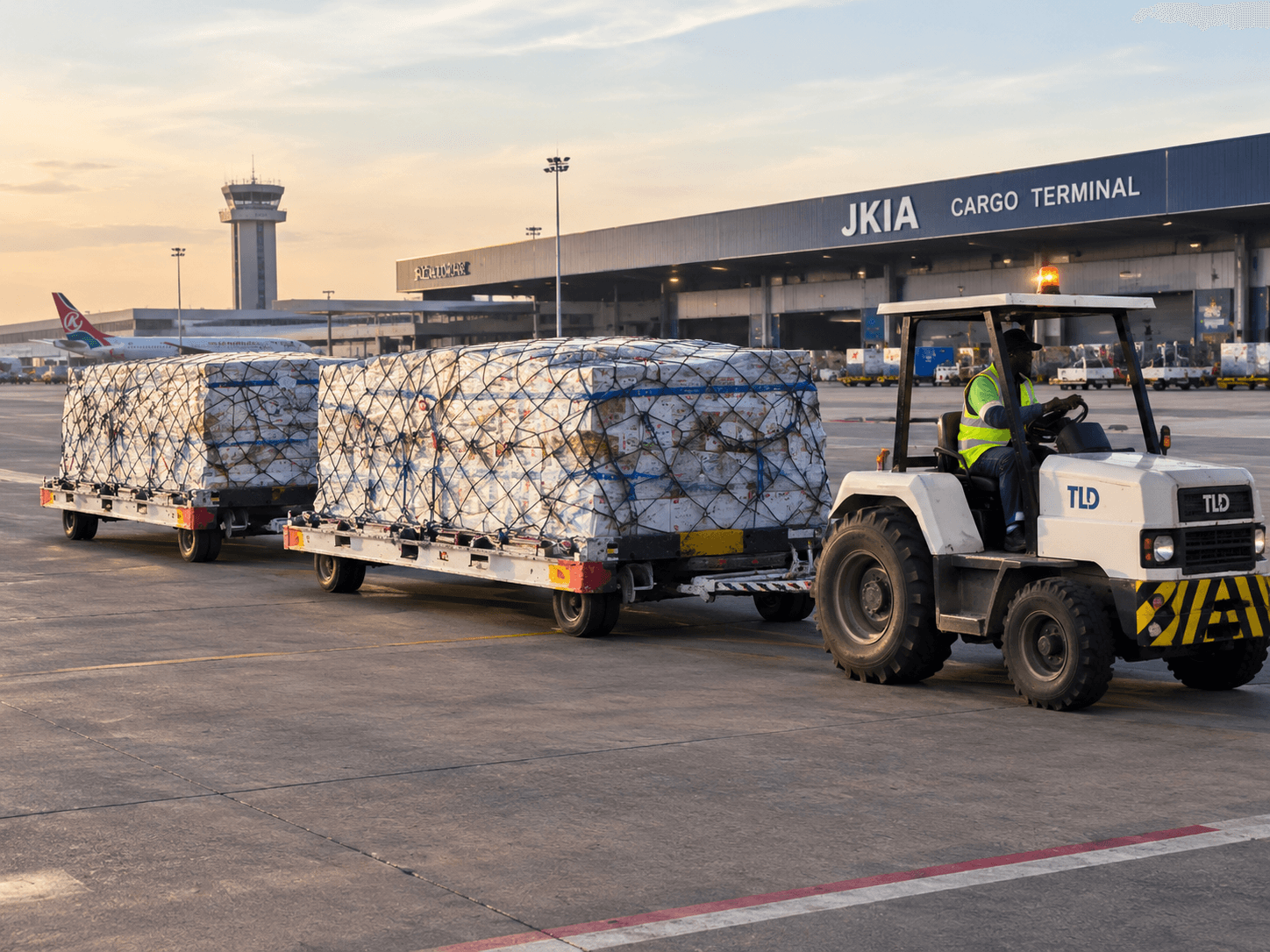
Air Freight Coordination
- Air Freight Coordination
- Cartons move to Jomo Kenyatta International Airport under cold chain conditions and are consolidated for air freight, with routing and timing coordinated to keep time outside temperature control to a minimum.
- Destination Handling
- On arrival, how quickly a shipment clears customs and reaches cold storage again determines how much of its vase life survives to reach the end customer — a factor we coordinate for on the Kenyan side of the journey.
Why Cold Chain Protects Vase Life
Cold chain isn't just a shipping term — it's the mechanism that determines how much vase life actually survives the journey to a buyer.
Respiration Doesn't Stop at Harvest
A cut stem is still a living organism — it keeps respiring, consuming its own stored sugars for energy. Warmer temperatures speed this up, using up reserves the flower needs to stay fresh and open properly once it reaches a vase.
Cold Slows the Clock
Holding flowers at low, consistent temperatures slows respiration dramatically, which is why the industry-standard 2–4°C range is used from grading through to air freight wherever possible — it's the single biggest lever on vase life.
Breaks in the Chain Are Cumulative
Vase life lost to a warm van, a delayed handover or a few hours on a tarmac doesn't come back once the flowers are cooled again — each break in temperature control shortens the usable life a buyer will get, even if it isn't visible on arrival.
Ethylene Sensitivity
Many cut flowers are sensitive to ethylene, a gas released by ripening fruit, decaying plant matter and some flowers themselves. Careful separation, ventilation and fast handling reduce ethylene exposure that would otherwise cause premature wilting or petal drop.
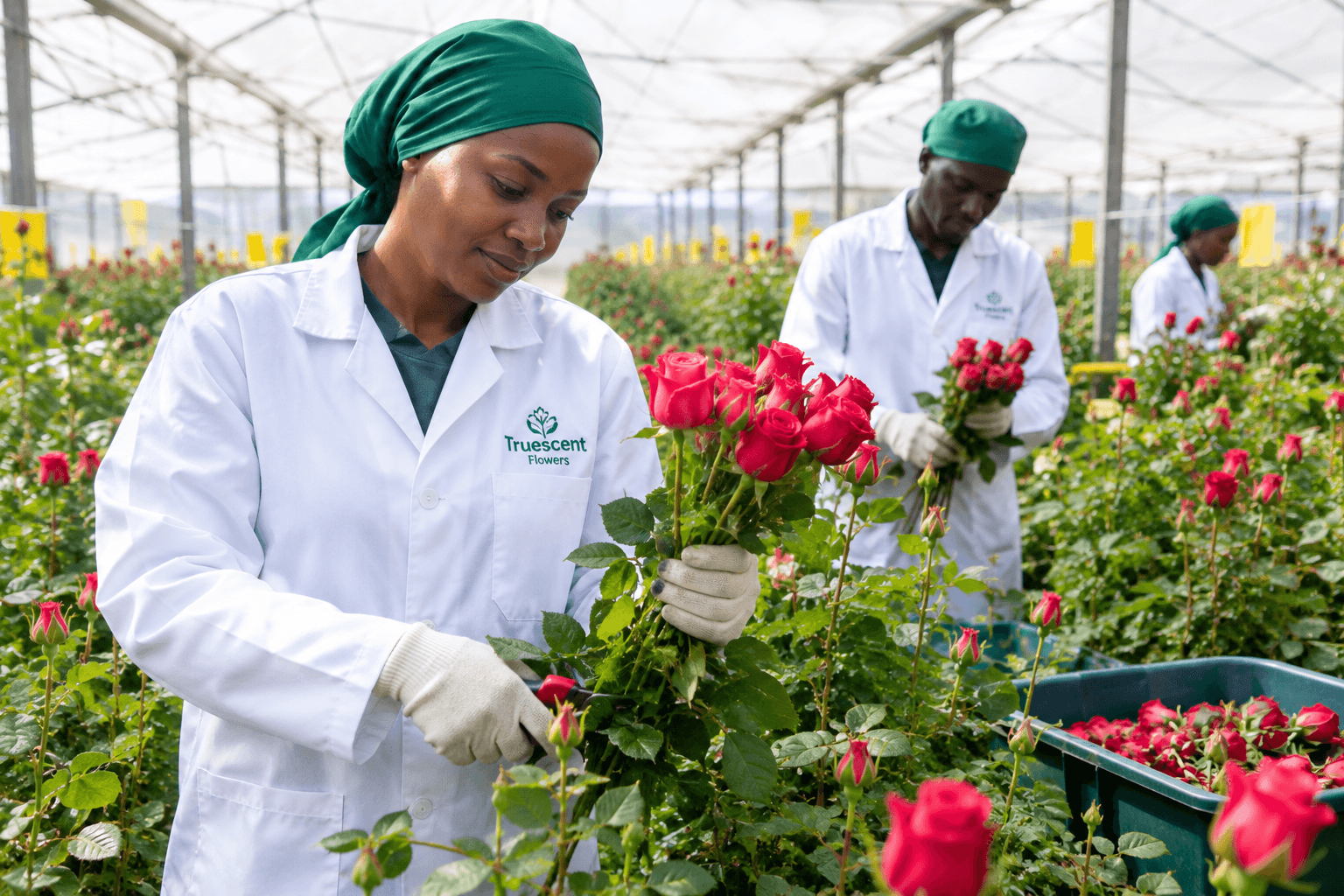
Responsible Growing, From the Ground Up
We believe sustainable practice and export quality go hand in hand. These commitments reflect our current approach and will be updated as our sustainability programme develops.
- Responsible Farming
- We favour growing practices that support long-term land productivity — soil health and consistent yield over several seasons — over short-term output.
- Water Management
- Irrigation is managed with attention to efficient water use, an important consideration in Kenya's highland growing regions where water is a shared agricultural resource.
- Environmental Stewardship
- We aim to minimise the environmental footprint of growing and export operations, from energy use in cold storage to the routing of shipments.
- Responsible Input Use
- Agricultural inputs — fertilisers and crop protection products — are used in line with recommended and regulated practice, applied at the levels required rather than by default.
- Waste Reduction
- We look for practical ways to reduce waste across growing and packing operations, including how plant material and packaging offcuts are handled.
- Sustainable Packaging
- We continue to evaluate packaging materials with a view to reducing environmental impact, balancing that against the protection cartons need to provide in transit.
- Worker Welfare
- The wellbeing of the people who grow, grade and pack every stem matters to how we operate — quality and fair treatment of the workforce are not separate concerns.
- Community Development
- We recognise our role within the communities where our growing partners operate, and the importance of the flower sector as a source of employment in Kenya's highland districts.
Certifications & Standards
Our export operations are certified and recognised under the following Kenyan flower industry standards.
- Certified
KEPHIS Phytosanitary Certification
Kenya Plant Health Inspectorate Service (KEPHIS)
Every shipment is inspected and certified by KEPHIS, Kenya's national plant health authority, confirming flowers meet the phytosanitary requirements of the destination country before export.
- Certified
Kenya Flower Council Member
Kenya Flower Council (KFC)
Kenya Flower Council is the country's flower industry body, setting labour, environmental and quality standards for member growers and exporters.
Quality & Cold Chain FAQs
How is freshness protected during export?
Freshness is protected through a combination of correct harvest timing, immediate hydration, temperature-controlled cold storage, protective packaging and fast air freight coordination — minimising the time flowers spend outside cold chain conditions from farm to destination.
What temperature is used for cold chain flower storage?
The cut-flower industry generally holds flowers in the 2–4°C range from grading through to air freight. Consistency matters more than the exact number — every break in that range, even briefly, shortens vase life.
What does 'grade' mean on a flower quotation?
Grade typically refers to stem length banding (for example 40cm, 50cm, 60cm, 70cm+ for roses) combined with bloom size and stem strength. It gives buyers a consistent way to compare and order specific quality tiers.
How long does vase life typically last for Kenyan flowers?
Vase life varies by variety, but Kenya's high-altitude growing conditions are associated with longer vase life than many temperate-grown flowers. How well cold chain is maintained after harvest has at least as much influence as growing conditions do.
What certifications does TrueScent Flowers hold?
TrueScent Flowers exports under KEPHIS phytosanitary certification and is a member of the Kenya Flower Council (KFC). Contact our export team for current documentation relevant to your order.
What happens if cold chain is broken during transit?
A broken cold chain accelerates respiration and can trigger premature ageing, wilting or petal drop that may not be visible immediately but shortens the flower's remaining usable life. This is why coordination between cold storage, packing and air freight handoffs is treated as a single continuous process rather than separate steps.