
Flower Export From Kenya: From Farm to International Buyer
September 10, 20269 min read
Contents
- Key Takeaways
- The Export Journey at a Glance
- Sourcing: Matching Supply to Specification
- Harvest: Timing the Cut
- Grading: Turning a Harvest Into a Specification
- Quality Control
- Hydration
- Pre-Cooling and Cold Storage
- Cold Chain: The Thread That Runs Through Everything
- Packing for Export
- Documentation
- Airport Handling at JKIA
- Air Freight
- Destination: Customs and Receiving
- Why Every Stage Matters
- Common Mistakes Buyers Should Watch For
- Frequently Asked Questions
- Related Reading
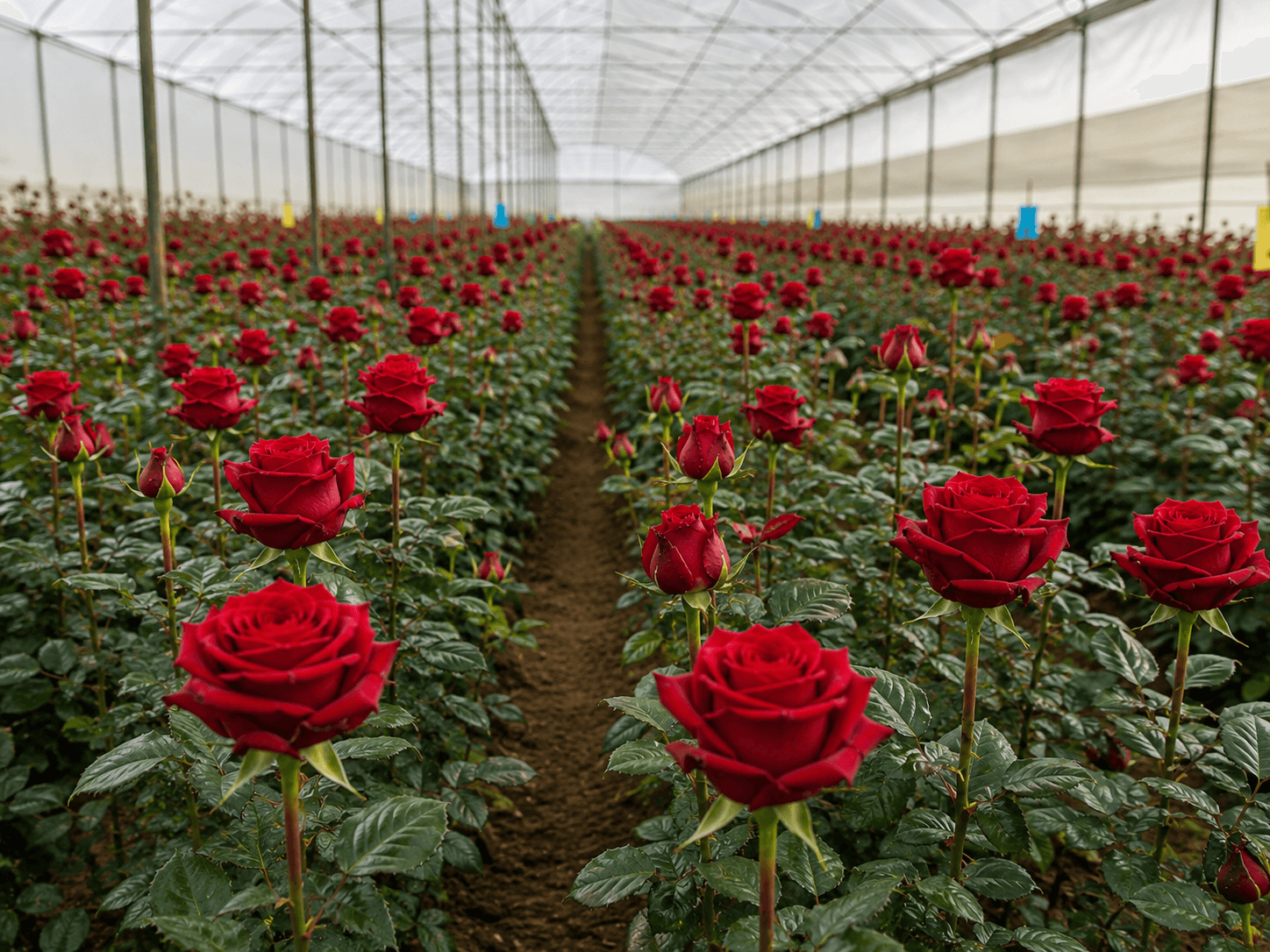
Exporting a fresh flower from a Kenyan farm to an international buyer is not a single event — it's a coordinated sequence of stages, each one protecting the value built in the stage before it. Understanding that sequence is genuinely useful for a buyer, because it explains why certain questions (about cold chain, about documentation, about lead time) matter, and what can quietly go wrong if any one stage is handled carelessly. This guide walks through the full journey — sourcing, harvest, grading, quality control, hydration, pre-cooling, cold chain, packing, documentation, airport, air freight and destination — for anyone who has never imported Kenyan flowers before.
Key Takeaways
- A Kenyan flower export shipment passes through roughly a dozen distinct stages between farm and buyer, and each one can only preserve, never restore, the quality delivered by the stage before it.
- Growing conditions set the ceiling on quality; everything from harvest onward determines how much of that ceiling actually survives to arrival.
- Cold chain continuity — not any single stage in isolation — is usually the biggest factor in how fresh a shipment arrives.
- Documentation and destination-handling readiness matter just as much as the physical handling of the flowers themselves.
The Export Journey at a Glance
| Stage | What happens | Why it matters |
|---|---|---|
| Sourcing | Variety, colour, grade and quantity matched against buyer specification | Sets the shipment up to actually meet the order, not just "a" order |
| Harvest | Stems cut at a calculated bloom stage | Determines how the flower opens over the following days |
| Grading | Sorted by stem length, bloom size and condition | Makes the quoted specification something a buyer can rely on |
| Quality Control | Inspected for pests, disease and physical damage | Protects product quality and destination import compliance |
| Hydration | Stems placed in a hydrating solution | Rebuilds water pressure lost during cutting |
| Pre-Cooling | Field heat removed before storage | Slows respiration before cold storage even begins |
| Cold Chain | Temperature-controlled storage and transfer | The single biggest lever on surviving vase life |
| Packing | Bunched, sleeved and cartoned | Protects stems from damage while allowing airflow |
| Documentation | Phytosanitary certificate, invoice, packing list | Lets the shipment clear customs without avoidable delay |
| Airport | Consolidated for air cargo under cold conditions | Minimises time spent outside temperature control |
| Air Freight | Transported to destination | The only practical mode for time-sensitive fresh flowers |
| Destination | Customs clearance and receiving | Return to cold storage as fast as possible preserves remaining vase life |
Sourcing: Matching Supply to Specification
The journey begins before a single stem is cut. Sourcing means matching a buyer's specification — variety, colour, stem length, grade and quantity — against what is genuinely available from current grower supply. This is also where a supplier's honesty matters most: a specification confirmed against real, current availability sets realistic expectations from the outset, rather than a shipment quietly substituting varieties or grades at the last minute.
Harvest: Timing the Cut
Stems are cut at a bloom stage calculated to maximise vase life once they reach the buyer, rather than at peak bloom, which would shorten the flower's usable life in transit and on arrival. Harvest timing is a judgement call specific to each variety — cut too early and a bloom may never open properly; cut too late and it may not survive the journey. This is one of the reasons growing experience matters as much as growing conditions.
Grading: Turning a Harvest Into a Specification
Each stem is graded by length, bloom or head size, straightness and overall condition against export-grade standards. Grading is what makes the specification on a quotation — stem length, bloom size, grade — something a buyer can actually rely on rather than a rough approximation. Consistent grading is also one of the clearest signals of a mature exporter, since it requires trained staff and defined standards applied batch after batch.
Quality Control
Alongside grading, stems are inspected for pests, disease and physical damage. This protects both the physical quality of the flower and compliance with destination-country import requirements — many markets have specific plant health expectations that a shipment must meet before it can even be certified for export.
Hydration
Immediately after grading, stems are typically placed in a hydrating solution to rebuild the water pressure lost during cutting. A flower that goes into cold storage properly hydrated holds up dramatically better than one that doesn't — this is a small, easily overlooked stage with an outsized effect on the flower a buyer eventually receives.
Pre-Cooling and Cold Storage
Before flowers enter long-term cold storage, field heat needs to be removed — a step called pre-cooling. Moving a warm flower straight into a cold room is far less effective than pre-cooling it first, since the flower's own temperature (not just the surrounding air) needs to come down to slow the respiration process that consumes the flower's stored energy and shortens vase life.
Cold Chain: The Thread That Runs Through Everything
From pre-cooling onward, flowers move into and stay within temperature-controlled conditions: cold storage, refrigerated transport to the airport, cold cargo handling at JKIA, and — where available — temperature-controlled air cargo to the destination. Cold chain integrity from this point forward is widely regarded as the single biggest factor in how much vase life survives the journey, because even a short break in temperature control (a delayed handoff, a warm tarmac wait) can undo careful handling at every earlier stage. See Flower Quality and Cold Chain for a deeper explanation of why this is true.
Packing for Export
Stems are bunched, sleeved and packed into export cartons designed to protect blooms from physical damage in transit while allowing enough airflow to prevent heat build-up inside a sealed box — a genuine trade-off between protection and ventilation. Packaging format varies by flower type and order volume and is confirmed as part of the quotation process. See How Fresh Flowers Are Packed for Export for more detail on how this works.
Documentation
Phytosanitary certificates, commercial invoices and packing lists are prepared to match destination-country import requirements, so a shipment can move through customs without avoidable delay. Getting documentation right is as much a part of "export quality" as the physical handling of the flowers — a perfectly handled shipment held up at customs for missing paperwork still arrives in worse condition than it should have.
Airport Handling at JKIA
Cartons move to the airport under cold chain conditions and are consolidated for air freight, with routing and timing coordinated to minimise the time flowers spend outside temperature control. Nairobi's Jomo Kenyatta International Airport (JKIA) has developed cargo handling infrastructure specifically built around fresh produce and flower exports, given how central this trade is to the airport's cargo volumes.
Air Freight
Because fresh flowers are so time-sensitive, air freight is the standard — effectively the only practical — mode of international transport for cut flowers. See Flower Air Freight From Kenya for a detailed look at what happens during this stage and what affects cost and quality.
Destination: Customs and Receiving
On arrival, flowers move through customs clearance and destination handling. The faster this stage clears — and the sooner the shipment returns to cold storage — the more vase life is preserved for the buyer. This is why buyer-side readiness (cleared paperwork, a cold-storage facility ready to receive the shipment, transport arranged from the airport) matters just as much as anything that happened in Kenya.
Why Every Stage Matters
A shipment is only as strong as its weakest stage. A flower can spend nearly its entire journey in ideal conditions and still lose meaningful vase life from a single break — a delayed cold-storage handoff, a warm tarmac wait, an unprepared document that holds a shipment at customs. This is why an experienced exporter manages the process end-to-end, treating it as one continuous chain rather than a series of separate handoffs each managed by someone else. See our full export process page for how TrueScent approaches each stage, or our buyer's guide for what to expect when placing your first order.
Common Mistakes Buyers Should Watch For
- Assuming "air freight" means the cold chain doesn't matter once flowers are airborne — it does, at every handoff before and after the flight.
- Not asking a supplier how they manage the handoff between farm cold storage and airport cold storage, which is often where breaks happen.
- Treating documentation as the freight forwarder's problem rather than confirming requirements with the supplier directly.
- Not having a cold-storage-ready receiving process at destination, which can undo good handling on the Kenyan side.
Frequently Asked Questions
How many stages are involved in exporting a flower from Kenya?
The journey runs through roughly a dozen coordinated stages — sourcing, harvest, grading, quality control, hydration, pre-cooling, cold chain, packing, documentation, airport handling, air freight and destination clearance — each protecting the value built in the one before it.
Which stage has the biggest impact on final flower quality?
Every stage matters, but cold chain integrity from pre-cooling onward is often the single biggest factor in how much vase life survives the journey, since even a brief break in temperature control can undo careful handling earlier in the process.
What documents accompany a Kenyan flower export shipment?
Phytosanitary certificates, commercial invoices and packing lists are prepared to match destination-country import requirements, so shipments move through customs without avoidable delay. Exact requirements vary by destination — confirm yours with your supplier and customs broker.
Does TrueScent manage the whole export process, or just certain stages?
TrueScent manages the process end-to-end — from sourcing and grading through cold chain handling, packing, documentation and air freight coordination to the destination.
What's the very first stage in the export chain?
Growing conditions on the farm set the ceiling on quality — no amount of careful handling downstream can add back what growing conditions didn't provide, which is why Kenya's high-altitude regions matter from the very start. Sourcing then matches that supply to a buyer's actual specification.
Related Reading
- How to Import Flowers From Kenya
- Flower Quality and Cold Chain
- Flower Air Freight From Kenya
- How Fresh Flowers Are Packed for Export
Ready to source Kenyan flowers? Request an Export Quote.
Ready to Source Kenyan Flowers?
Tell us your flower, specifications and destination — our export team will confirm availability.
