
Contents
- Key Takeaways
- Cutting at the Right Stage
- Hydration Before Cold Storage
- Maintaining the Cold Chain in Transit
- Packing for Protection, Not Just Space
- What Happens on Arrival: The Buyer's Side of Vase-Life Protection
- Signs of a Well-Managed Cold Chain on Arrival
- Fast Customs Clearance on Arrival
- Frequently Asked Questions
- Related Reading
Fresh flowers are perishable from the moment they are cut, which makes handling during transport just as important as growing conditions. This guide focuses specifically on what protects — and what erodes — vase life during the transport window itself, and what a buyer can do on their own side of the process to protect the vase life a well-handled shipment arrives with.
Key Takeaways
- Vase life is a finite, non-renewable resource from the moment a stem is cut — every stage either protects it or spends it.
- There's no fixed "safe window" outside cold storage — even short breaks measurably shorten usable vase life, so the goal is minimising exposure at every handoff, not managing to a specific time limit.
- What a buyer does in the first hour after receiving a shipment has a real, measurable effect on how much vase life the end customer actually experiences.
Cutting at the Right Stage
Flowers are harvested at a bloom stage calculated to allow them to open fully after arrival, rather than at peak bloom, which would shorten usable vase life in transit. This decision, made at the farm before a buyer ever sees the flower, is the starting point for everything that follows — a stem cut at the wrong stage can't be fully corrected by good handling afterward.
Hydration Before Cold Storage
Immediately after harvest, stems are typically placed in a hydrating solution to rebuild water pressure lost during cutting, before moving into cold storage. A well-hydrated stem entering the transport chain has meaningfully more resilience to the stresses of the journey ahead than one that skipped this step.
Maintaining the Cold Chain in Transit
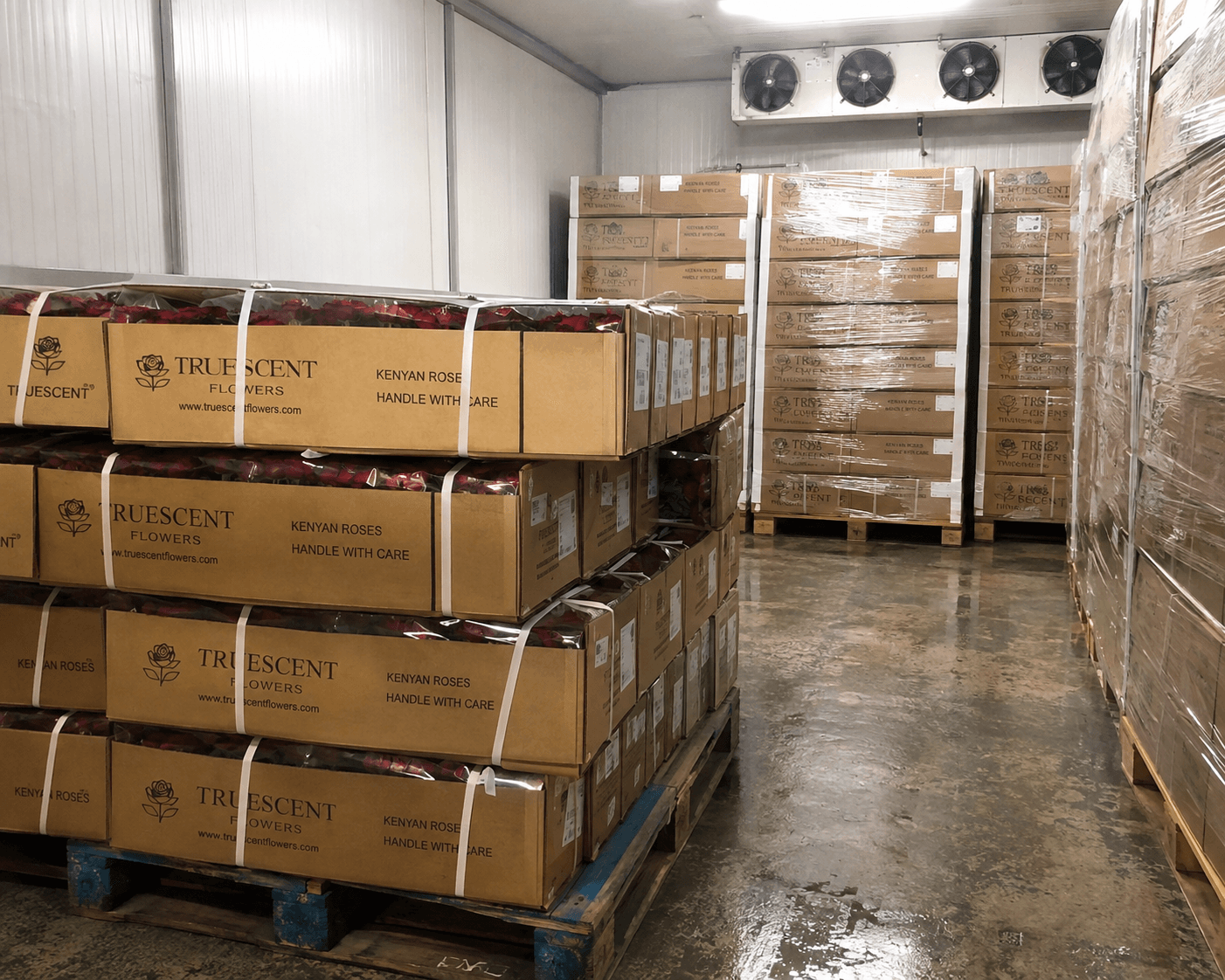
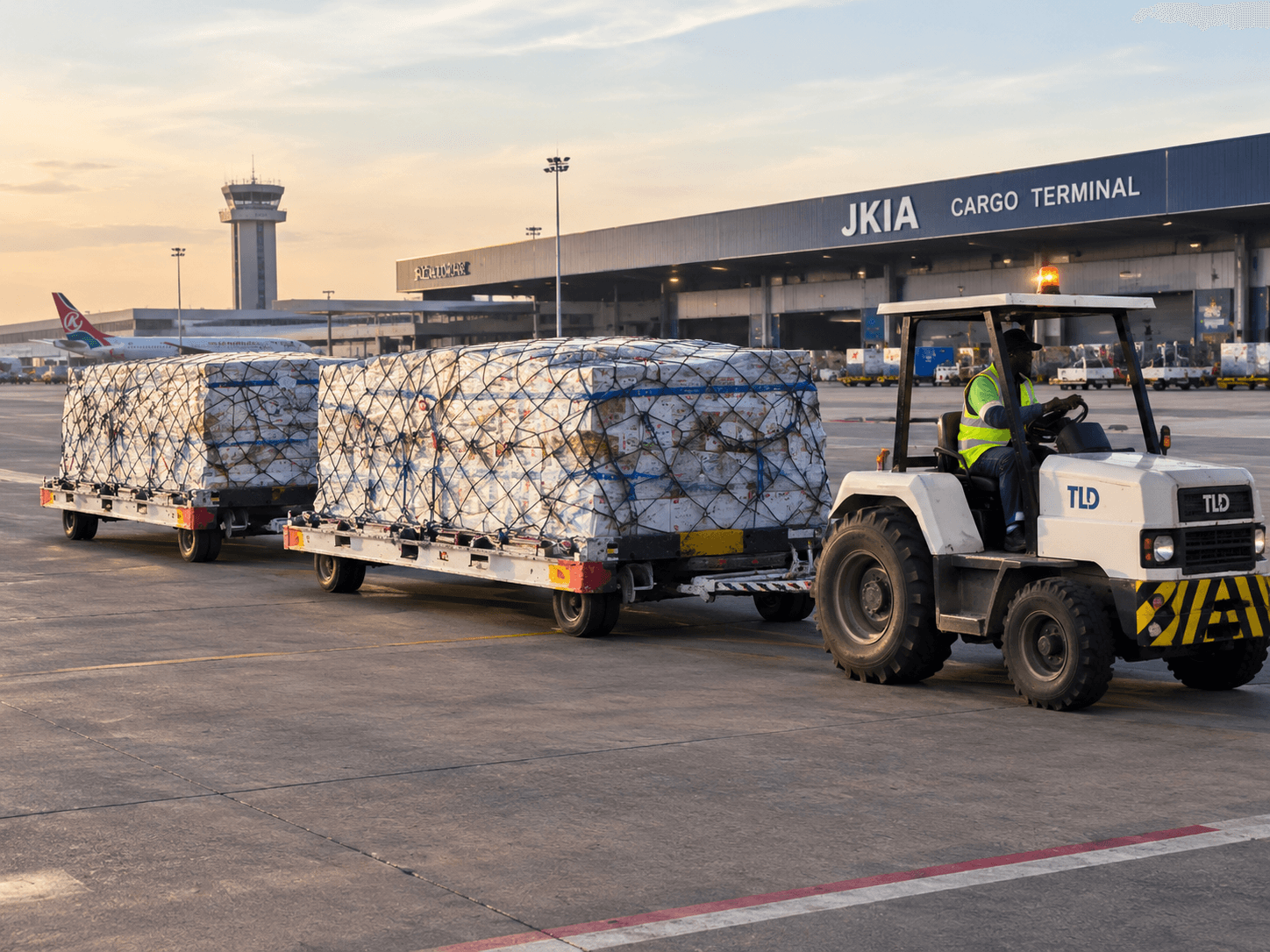
Temperature control from farm through packing, airport handling and air freight is one of the single biggest factors in vase life outcomes. Breaks in the cold chain — even briefly — can measurably shorten how long flowers last for the end buyer. See Flower Quality and Cold Chain for the full stage-by-stage explanation of how this is managed.
Packing for Protection, Not Just Space
Export cartons are designed to protect stems from crushing and moisture loss while allowing enough airflow to prevent heat build-up inside the box during transit. A carton packed too tightly for the sake of fitting more stems into a shipment can trap heat and accelerate deterioration — good packing balances protection against ventilation rather than maximising density alone.
What Happens on Arrival: The Buyer's Side of Vase-Life Protection
Everything above happens before a shipment reaches you. What you do in the first hour after receiving it matters just as much:
- Move flowers to cold storage immediately — don't let boxes sit at ambient temperature while other tasks are handled first.
- Unpack and inspect promptly rather than leaving cartons sealed, which traps any residual heat and limits airflow.
- Re-cut stems before placing in water, removing any tissue that dried out or was compressed during transit, and use clean, sharp tools to avoid crushing the stem.
- Use clean water and, where appropriate, a floral preservative solution to support rehydration after the journey.
- Keep flowers away from ripening fruit and direct heat sources once unpacked, since ethylene exposure and heat both accelerate ageing.
Signs of a Well-Managed Cold Chain on Arrival
A shipment that has come through a well-managed cold chain typically shows firm, turgid stems, minimal petal or leaf wilting, and blooms at the expected stage of opening for their harvest timing. Visible wilting, limp stems or advanced bloom opening beyond what's expected for the variety can indicate a cold-chain break somewhere in the journey — worth raising with your supplier so the specific handoff can be investigated.
Fast Customs Clearance on Arrival
Because the cold chain clock keeps running once flowers land, fast customs clearance and continued cold storage at destination are just as important as everything that happened before the flight. See our Export Process page for the full journey from farm to destination.
Frequently Asked Questions
What temperature should fresh flowers be kept at during transport?
The cut-flower industry generally holds flowers in the 2–4°C range from grading through to air freight. Consistency matters more than the exact number — even a brief break in that range can shorten vase life.
How long can flowers safely stay outside cold storage during transport?
There's no fixed safe window — even short breaks in temperature control measurably shorten usable vase life, so experienced exporters focus on minimising time outside cold storage at every handoff rather than relying on a specific time limit.
Does packaging affect how well flowers stay fresh in transit?
Yes. Export cartons need to protect stems from physical damage while allowing enough airflow to prevent heat build-up inside a sealed box — a carton packed too tightly can trap heat and accelerate deterioration.
What happens if the cold chain is broken during transit?
A broken cold chain accelerates respiration and can trigger premature ageing, wilting or petal drop that may not be visible immediately but shortens the flower's remaining usable life.
What should I do in the first hour after receiving a shipment?
Move the flowers to cold storage immediately, unpack and inspect promptly, re-cut stems before placing them in clean water (with a floral preservative where appropriate), and keep them away from heat sources and ripening fruit.
What should happen as soon as flowers arrive at their destination?
Fast customs clearance and a prompt return to cold storage matter as much as everything that happened before the flight, since the cold chain clock keeps running once flowers land.
Related Reading
Ready to plan a shipment? Request an Export Quote.
Ready to Source Kenyan Flowers?
Tell us your flower, specifications and destination — our export team will confirm availability.
Related Articles
Quality & LogisticsSeptember 20267 min read
Flower Air Freight From Kenya: What International Buyers Should Know
Why fresh flowers travel by air, how Nairobi's cargo infrastructure supports the trade, and what information buyers should provide when requesting freight-inclusive pricing.
Read article →
Quality & LogisticsSeptember 20264 min read
How Fresh Flowers Are Packed for Export
Export packaging has to do two competing jobs at once — protect stems from damage and keep air moving to prevent heat build-up.
Read article →Quality & LogisticsSeptember 20268 min read
Flower Quality and Cold Chain: From Kenyan Farm to International Buyer
Why temperature control is the single biggest factor in flower freshness, and how it's maintained at every stage from Kenyan farm to international buyer.
Read article →