
Flower Suppliers in Kenya: What International Buyers Should Know
September 10, 20266 min read
Contents
- The Types of Flower Supplier Businesses in Kenya
- Large Vertically-Integrated Grower-Exporters
- Smaller Specialist Growers
- Consolidators and Export Aggregators
- How Kenya's Growing Regions Fit Into This
- Nairobi and JKIA as the Export Hub
- Documentation and Certification a Legitimate Supplier Should Show You
- What a Supplier Can't Tell You Upfront
- Where TrueScent Flowers Fits Into This Landscape
- Frequently Asked Questions
Kenya's flower export sector is large, established and genuinely varied — which means the word "supplier" can describe very different kinds of businesses depending on who you're talking to. Before evaluating any single supplier, it helps to understand the landscape they operate within: who actually grows and exports Kenyan flowers, how the country's growing regions and export infrastructure fit together, and what a legitimate operator should be able to show you. This is a landscape overview rather than a checklist — for a practical evaluation framework, see How to Choose a Kenyan Flower Supplier.
The Types of Flower Supplier Businesses in Kenya
Kenya's flower sector includes businesses operating at meaningfully different scales and with different structures, and understanding which type you're dealing with helps set realistic expectations.
Large Vertically-Integrated Grower-Exporters
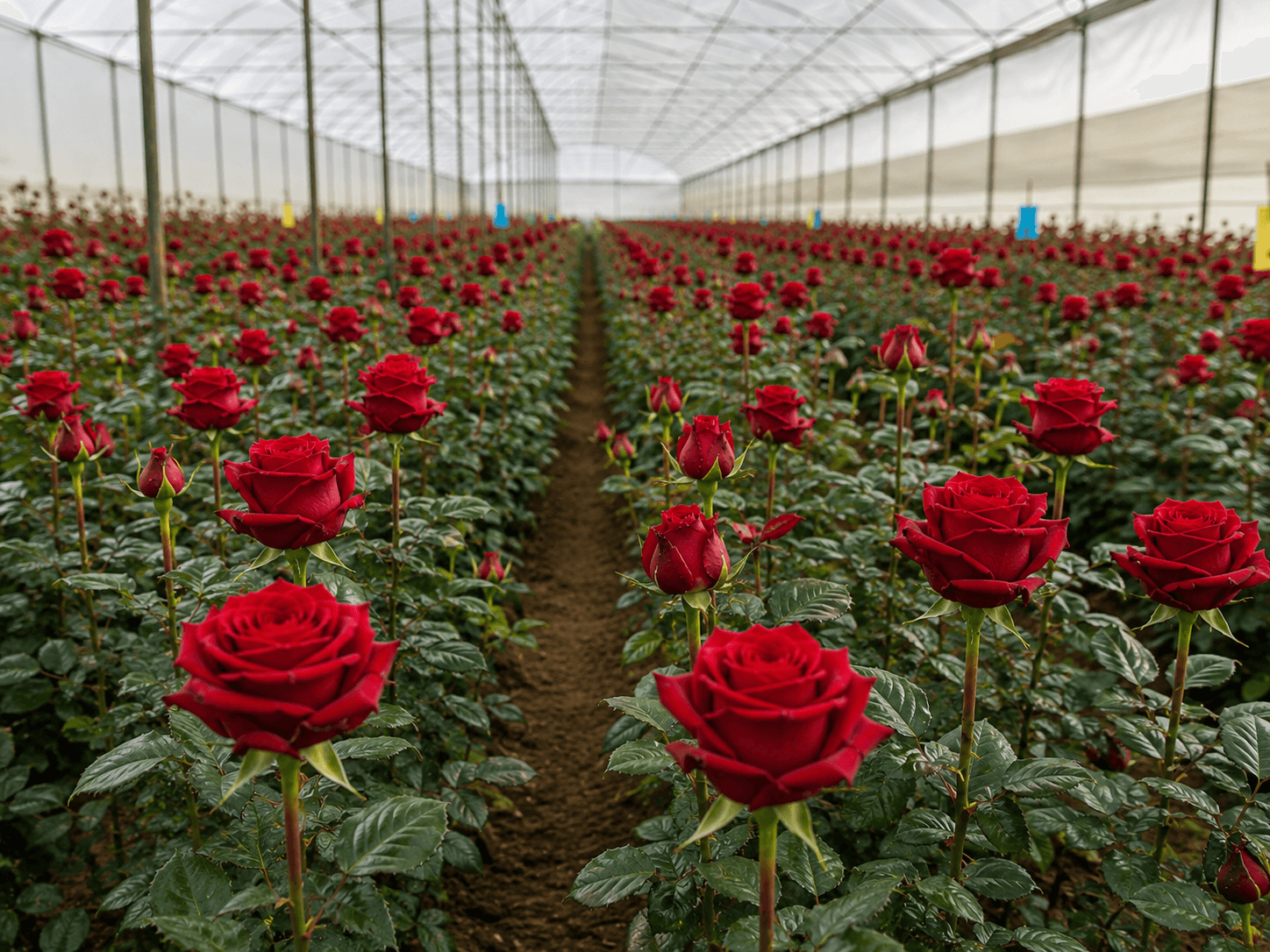
At one end of the spectrum are large operations that grow, grade, pack and export flowers themselves, typically running substantial greenhouse acreage on a single farm site. These businesses control their own supply from cutting to carton, which can support consistency for buyers who need a single named variety at scale, though their catalogue is naturally limited to what they grow themselves.
Smaller Specialist Growers
At the other end are smaller growers who specialise in a narrower range of varieties or flower types — a particular rose colour family, a specific summer or filler flower, a niche specialty bloom. These growers can offer real depth in their specialty but typically lack the breadth of catalogue that a buyer sourcing a wide product mix would need from a single supplier.
Consolidators and Export Aggregators
Between these two ends sit consolidators and exporters who aggregate flowers from multiple farms into a single export catalogue and shipment. This structure lets a buyer source a broader mix of varieties, colours and flower types through one relationship and one set of documentation, rather than managing separate relationships with individual farms. The trade-off is that a buyer is relying on the consolidator's own quality control and grower relationships, not growing conditions they can inspect directly themselves — which is why the questions in How to Choose a Kenyan Flower Supplier matter regardless of which structure a supplier uses.
How Kenya's Growing Regions Fit Into This
Regardless of business structure, the flowers moving through Kenya's export system are grown in the same handful of highland districts — concentrated around Naivasha and Nakuru in the Rift Valley, and around Nanyuki, Timau and the wider Mount Kenya region, generally at elevations between 1,500 and 2,500 metres above sea level near the equator. This shared growing geography is part of why Kenyan flowers carry a consistent quality reputation across different supplier types, rather than quality being tied to one specific business or location. See Kenya's Flower-Growing Regions for more detail on how these districts differ, and Why Kenya for the climate science behind the advantage itself.
Nairobi and JKIA as the Export Hub
Nearly all Kenyan flower exports move through Jomo Kenyatta International Airport (JKIA) in Nairobi, which has developed into a major cargo hub for fresh produce and flowers with established air-cargo infrastructure and regular freight capacity to major destination markets. Whether a supplier grows flowers themselves or consolidates from multiple farms, their export operation ultimately runs through this same air-freight infrastructure — which is part of why proximity to Nairobi and JKIA matters more, in practice, than which specific highland district a stem was grown in.
Documentation and Certification a Legitimate Supplier Should Show You
Whatever the business structure, a legitimate Kenyan flower supplier should be able to produce two specific things on request: a KEPHIS phytosanitary certificate confirming the shipment meets Kenya's plant health export standards, and evidence of Kenya Flower Council (KFC) membership, the industry body most Kenyan export-grade flower businesses belong to. Ask to see current documentation relevant to your specific order rather than accepting a general assurance of compliance — a supplier with nothing specific to show you when asked is a signal worth taking seriously.
What a Supplier Can't Tell You Upfront
Be cautious of a supplier willing to quote a fixed price list sight unseen, or one claiming every variety is available year-round regardless of season. Reputable Kenyan flower businesses generally price per order — based on variety, grade, volume, packaging and destination — because that's genuinely how cost is determined in this trade, and availability genuinely does shift with grower production cycles and demand. See Kenyan Flower Seasons for why availability varies even in a stable growing climate.
Where TrueScent Flowers Fits Into This Landscape
TrueScent Flowers operates as a Kenyan flower sourcing and export business based at the Agrotronics Building, Freight Road, JKIA, Nairobi — positioned within Kenya's established air-cargo export infrastructure. We work with a sourcing network across Kenya's flower-growing regions to offer buyers a broad catalogue spanning roses, carnations, summer flowers, specialty flowers and foliage, coordinated through a single point of contact, one quotation process and one set of export documentation. We export under KEPHIS phytosanitary certification and are a member of the Kenya Flower Council. As with any Kenyan supplier, we'd encourage you to ask the same questions of us that this guide raises of the wider industry — see our Kenya Flower Exporter overview for how we structure sourcing, grading and export, or our buyer's guide for the step-by-step process of placing a first order.
Frequently Asked Questions
What's the difference between a grower-exporter and a consolidator in Kenya?
A grower-exporter grows, grades, packs and exports flowers it produces itself on its own farm, giving it direct control over supply but a catalogue limited to what it grows. A consolidator aggregates flowers from multiple farms into a single export catalogue and shipment, offering broader variety and volume flexibility through one relationship.
How do I know if a Kenyan flower supplier is legitimate?
Ask to see current KEPHIS phytosanitary certification and evidence of Kenya Flower Council membership, and expect specific answers about grading, cold chain handling and documentation rather than general assurances. A supplier unwilling or unable to produce this on request is worth treating with caution.
Does it matter which Kenyan region my supplier sources from?
Not as much as buyers sometimes assume. Kenya's main growing regions share a similar altitude and equatorial climate advantage, so the practical questions to focus on are a supplier's specification accuracy, quality systems and documentation rather than the specific district a stem was grown in.
Is there a standard price list for Kenyan flowers?
No. Reputable suppliers generally quote per order based on variety, grade, volume, packaging and destination, since that's how cost is actually determined in this trade. Be cautious of any supplier offering a fixed price list without discussing your specification.
How does TrueScent Flowers fit into Kenya's flower supplier landscape?
TrueScent operates as a Kenyan flower sourcing and export business based at JKIA, Nairobi, working across a sourcing network spanning Kenya's flower-growing regions. We export under KEPHIS phytosanitary certification and Kenya Flower Council membership, and coordinate quotation, documentation and air freight through a single point of contact.
Ready to source Kenyan flowers? Request an Export Quote.
Ready to Source Kenyan Flowers?
Tell us your flower, specifications and destination — our export team will confirm availability.
Related Articles

Buyer GuidesSeptember 20264 min read
Kenyan Flowers for European Wholesalers
Europe remains the largest destination for Kenyan cut flowers, anchored by the Netherlands' auction and distribution network.
Read article →
Buyer GuidesSeptember 20264 min read
Buying Kenyan Flowers for Dubai and the UAE
What buyers in Dubai and the wider UAE typically look for when sourcing Kenyan-grown flowers, and how the route works logistically.
Read article →
Buyer GuidesSeptember 20267 min read
How to Choose a Kenyan Flower Supplier
A practical checklist for evaluating a Kenyan flower supplier — from catalogue transparency and quality systems to documentation, communication and commercial terms.
Read article →