
Contents
Standard (single-head) roses and spray roses are grown from different rose types bred for different purposes, and understanding the distinction helps a wholesale buyer decide not just what each format is, but which one — or what mix of both — actually fits a given order.
Key Takeaways
- Single-head and spray roses differ in bloom format, typical use case and how they're graded, packed and priced — treat them as two related but distinct products, not variations of the same order line.
- Single-head roses anchor an arrangement; spray roses add volume and texture around that anchor.
- Many wholesale and event orders combine both, which means planning quantities for each separately rather than treating "roses" as one line item.
- Vase life depends on harvest timing and cold-chain handling for both formats — not on bloom format itself.
Bloom Format
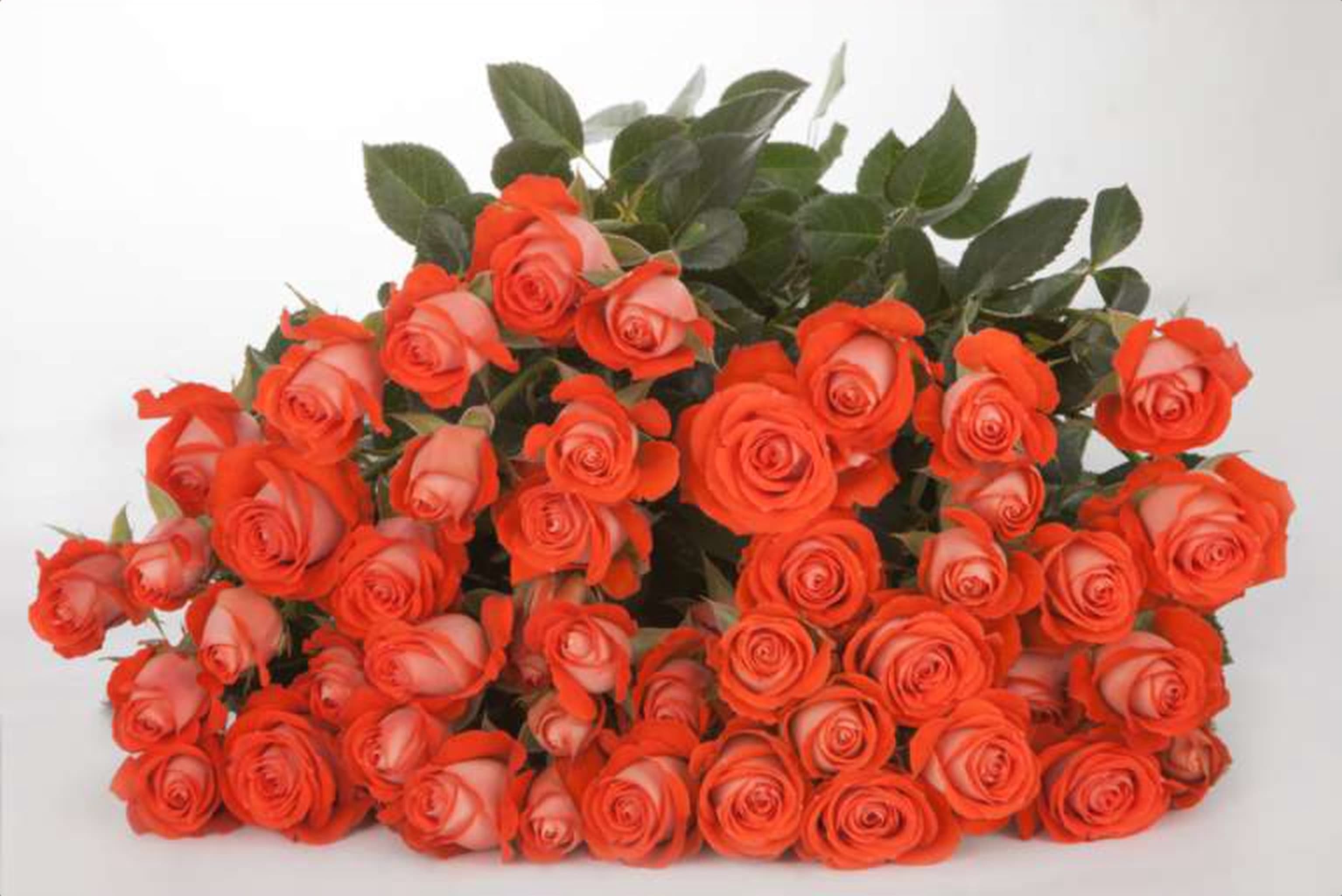
A single-head rose puts all of its growing energy into one bloom per stem, producing the large, classic rose shape most people picture when they think "rose." A spray rose branches partway up the stem, producing several smaller blooms — usually three to seven — from a single cutting.
Typical Specifications
In our catalogue, single-head roses are graded to a 5.5–6.5cm bloom diameter across 50–80cm stems, while spray roses run 2.5–3cm per head across 40–80cm stems. These aren't universal industry figures — grading ranges vary by farm and variety — but they reflect the format difference consistently.
Single-Head vs Spray Roses: A Buyer's Comparison
| Single-Head Roses | Spray Roses | |
|---|---|---|
| Role in an arrangement | Focal flower / visual anchor | Volume, texture, supporting element |
| Typical bloom | One large bloom per stem | 3–7 smaller blooms per stem |
| Best suited to | Bridal work, statement arrangements | Garden-style arrangements, filler volume |
| Order planning | Usually the larger line item in a rose-heavy order | Often ordered alongside single-head roses in smaller volume |
| Pricing | Depends on variety, grade and volume | Depends on variety, grade and volume — not simply "cheaper" than single-head |
Where Each Is Used
Single-head roses are the default choice for bridal bouquets, statement arrangements and any design where a large, uniform bloom is the visual anchor. Spray roses are used to add volume, movement and texture around that anchor, or on their own in more relaxed, garden-style arrangements where many smaller blooms suit the aesthetic better than one large one.
Which Should a Wholesale Buyer Choose?
The honest answer is that most wholesale buyers with a varied product range end up ordering both, in different proportions depending on the end use. A useful way to decide is to work backward from what you're supplying to: a bridal-focused florist programme will lean heavily toward single-head roses, a garden-style or mixed-bouquet retail programme will use a higher proportion of spray roses, and an event business supplying both formats will want flexibility to adjust the mix order to order. Rather than picking one format exclusively, most buyers benefit from establishing a standing ratio with their supplier that can flex with demand.
Ordering Both Together
Many wholesale and event orders combine both formats — single-head roses as the focal flower, spray roses as a supporting or filler element — which is worth planning for when specifying quantities, since the two formats are graded, packed and priced differently. Browse single-head roses and spray roses separately, or see the full Kenyan Roses overview.
Frequently Asked Questions
Can I order a mix of standard and spray roses in one shipment?
Yes — many wholesale and event orders combine both formats, with single-head roses as the focal flower and spray roses as a supporting element. Specify quantities for each separately, since they're graded, packed and priced differently.
Are spray roses cheaper than standard roses?
Pricing depends on variety, grade and volume rather than format alone, so it isn't a fixed relationship. Request a quote specifying both formats to compare pricing for your order.
How many blooms does a spray rose stem carry?
Usually three to seven smaller blooms per stem, branching from a single cutting, compared to the one large bloom per stem on a single-head rose.
Which format is better for bridal bouquets?
Single-head roses are the default choice for bridal work and statement arrangements where a large, uniform bloom is the visual anchor. Spray roses are more commonly used to add volume and texture around that anchor, or in garden-style arrangements.
Do spray roses have a shorter vase life than standard roses?
Vase life for both formats depends mainly on harvest timing and how well the cold chain is maintained after cutting, rather than on bloom format itself. See Flower Quality and Cold Chain for what drives vase life outcomes.
Should a wholesale buyer choose one format exclusively?
Not usually — most buyers with a varied product range order both in different proportions depending on end use, and establishing a standing ratio with your supplier that can flex with demand is often more practical than committing to one format alone.
Related Reading
- Kenyan Roses for Export: Varieties, Colours, Grades & Buying Guide
- Wholesale Flower Buying Guide for International Buyers
Ready to order? Request an Export Quote.
Ready to Source Kenyan Flowers?
Tell us your flower, specifications and destination — our export team will confirm availability.
Related Articles

Flower GuidesSeptember 20263 min read
Kenyan Gypsophila: Baby's Breath for Wholesale Buyers
Gypsophila's airy, branching form makes it one of the most widely used filler flowers in the global cut-flower trade.
Read article →
Flower GuidesSeptember 20263 min read
Kenyan Alstroemeria: A Buyer's Guide
Alstroemeria's long vase life and distinctive bicolour markings make it one of the most reliable filler and focal flowers in wholesale floristry.
Read article →
Flower GuidesSeptember 20267 min read
Kenyan Roses for Export: Varieties, Colours, Grades & Buying Guide
A practical buying guide to Kenyan roses for export — single-head and spray formats, colour families, stem lengths, grades, vase life and how to compare suppliers before you order.
Read article →